
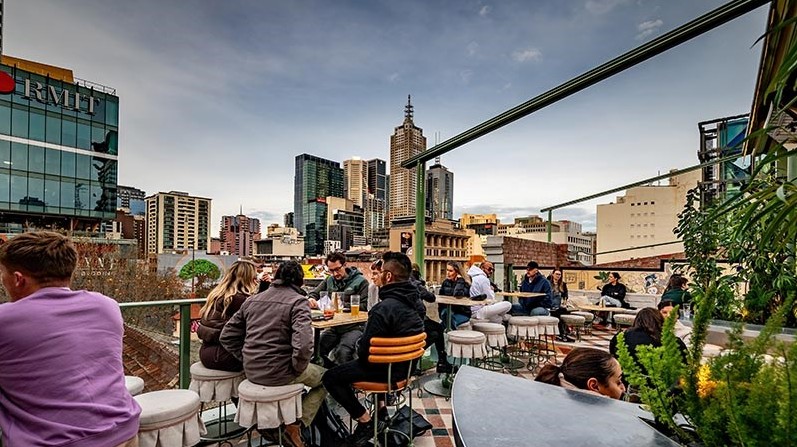
Melbourne has just been named best city in the world! Will this translate into the real estate market?
- Posted By Sam May
Some things are just a matter of perspective.
Taylor Swift releasing a new album is an aural gift for some and an unfortunately unavoidable media storm for others.
The winter footy codes are kicking off now, which is a fervent source of vicarious joy for some, a trigger of domestic irritation for others.
Melbourne’s flatlining property market? Yes, it’s a relatively affordable Australian oasis for those trying to get a foothold in the market but a sign of economic malaise and faltering investments for others.
So, why is the Melbourne property market lagging behind other cities when it comes to capital growth, is a turnaround looming, and can the Victorian capital’s real estate truly be regarded as ‘cheap’.
Why Melbourne property market is slow
Housing affordability remains one of the most pressing issues confronting Australia and is a topic commanding arguably the most attention among politicians debating the potential remedies that will avert a generational disaster.
Melbourne is to be commended for consistently producing more new housing supply than any other Australian city. Planning frameworks in Victoria have traditionally been more permissive toward greenfield housing estates, medium-density suburbs and inner-city apartment development.
That supply pipeline has helped prevent the severe shortages seen in cities such as Perth and Brisbane.
Arguments that investor activity produces the required rental stock are also somewhat undermined by Victoria’s relatively harsh approach to investors.
Melbourne property market snapshot
- Median dwelling value: $826,132
- Annual price growth: 4.7%
- Price-to-income ratio: 8.6
- Forecast 2026 growth: 3–6%
Investors have largely shunned Victoria, which has introduced several property-related taxes in recent years, including levies linked to land tax changes, vacant residential land and Covid debt repayment measures.
These policies have reduced investor demand compared with other states, dampening price growth relative to markets such as Queensland and Western Australia. But rents remain more affordable in Victoria than other comparable cities.
Laura Scott, Principal Licensee, aussieproperty.com, said Victoria delivering hundreds of thousands of new dwellings over the past 10 to 15 years and significantly more than comparable states, has moderated price growth.
“The city also experienced population declines during the pandemic and long lockdowns that temporarily reduced demand.
“This period of subdued growth is the main reason Melbourne now has one of the lowest median dwelling prices among the major capitals.”
Melbourne’s property market was the slowest of all the capital cities over the past 12 months, lifting by 4.7 per cent. It fell by 0.4 per cent of the current quarter, also underperforming the other cities.
Belinda Markoski, Buyers Advocate, Belinda Markoski Property, attributed Melbourne’s relative inactivity to three major factors.
“First, supply. Melbourne has consistently delivered more new housing stock than anywhere else and that pipeline has acted as a natural price moderator in a way that Brisbane, Perth and Adelaide simply haven’t had; Brisbane, Perth and Adelaide were simply catching up,” Ms Markoski told API Magazine.
“Second, sentiment and policy overhang. Melbourne experienced negative sentiment coming out of the pandemic, land tax changes, the perception of government intervention in the rental market, and memories of extended lockdowns all weighed on investor appetite and that sentiment suppressed demand at exactly the time other cities were experiencing strong capital inflows.
“Third, interest rate sensitivity. Melbourne's median price point is higher in absolute terms than most other capitals, which means repayments were more acutely affected by the rate-rising cycle.
“That kept a lid on price growth while lower-priced markets in Perth and Adelaide absorbed the same rate environment with far less friction, as their buyers were simply borrowing less.”
Is Melbourne property actually cheap?
With annual growth of 4.7 per cent, Melbourne might seem affordable relative to Perth’s 22.0 per cent, Darwin’s 19.4 per cent and Brisbane’s 17.3 per cent gains.
But that 4.7 per cent is still pushing property further out of reach of buyers. Wages in Victoria are only rising by 3.2 per cent and that increase is swallowed by an inflation rate of 3.8 per cent before any consideration is given to buying a home.
Melbourne’s median dwelling value ($826,132, according to Cotality) may have slipped behind all capitals outside Darwin and Hobart, but that too is a matter of perspective.
“On an absolute price-to-income basis, Melbourne is not cheap,” Ms Markoski said.

“Affordability for first home buyers and owner-occupiers remains stretched, and anyone suggesting Melbourne property is inexpensive in a historical context isn’t looking at the full picture.
“What has shifted is relative value; Brisbane, Perth and Adelaide have run hard, driven by interstate migration, resources, and demand that supply couldn't keep pace with.
“That surge has closed the gap with Melbourne in a way that would have looked almost inconceivable five years ago.
“For investors, the more useful question isn’t whether Melbourne is cheap in absolute terms, but whether it represents better value today than it did two years ago relative to its long-term fundamentals.
“On that measure, the answer is yes. Melbourne has the population, the infrastructure pipeline, the employment base, and the lifestyle credentials to support strong long-term capital growth.
“The current relative affordability is, in my view, a window not a permanent condition.”
The price-to-income ratio measures how many years of the average household’s income are needed to buy the median-priced home. According to the ANZ–CoreLogic Housing Affordability Report, the dwelling value-to-income ratio sits at about 10.6 in Sydney and 8.6 in Melbourne, compared with 7.9 in Brisbane and 5.8 in Perth.
Melbourne’s price-to-income ratio remains relatively high because housing costs have risen faster than household incomes over the past two decades, while higher average incomes in Perth help keep its affordability ratio lower despite strong recent price growth.
Is price recovery a case of if or when?
For better or worse, Melbourne property prices appear set for a gradual rather than meteoric rise over the next one to two years.
Melbourne might have this week been named the world’s best city by Time Out magazine but that does not necessarily mean people will be pouring into the city’s property market.
Forecasts compiled by analysts show Melbourne prices rising roughly 3–6 per cent in 2026, depending on the bank or research house.
Others offer a more buoyant view. Modelling from consultancy KPMG suggests Melbourne house prices could rise about 14 per cent combined across 2026 and 2027.
Keeping prices in check, new listing activity has picked up in Melbourne, suggesting that vendors are becoming more active as market conditions stabilise.
Ms Scott told API Magazine that Melbourne is currently moving through a bottoming phase, with modest price growth returning after several soft years.
“Key drivers likely to support a recovery include strong population growth returning and tight rental markets pushing renters toward buying, however, high construction costs and lingering investor caution may limit rapid growth in the immediate term.”

Melbourne home prices lag other capitals, but buyers spot value in key suburbs
Read further articles relating to: Affordability
Ms Markoski was similarly positive but cautious.
“Conditions for a Melbourne recovery are building but I’d caution against expecting a sharp turnaround in the near term.
“It’s important to acknowledge what has weighed on investor confidence in Victoria, policy instability, land tax changes, and a growing perception that the state government views property investors as a revenue opportunity rather than a critical part of the housing solution.
“That uncertainty has kept many investors on the sidelines, and until there is greater policy clarity, some of that hesitation will remain.
“What’s interesting, however, is that the first home buyer market hasn’t shown the same hesitation. Demand at the entry level has remained resilient.”
Buyers with money were best placed to capitalise on an expected upturn.
“The clearest opportunity right now is in blue chip residential,” Ms Markoski said.
“That segment of the market has stabilised, the days of price softening appear largely behind us, and growth is on the horizon.
“Well-located properties in established inner and middle-ring suburbs will move first and fastest.
“If I were advising an investor today, I’d be positioning now rather than waiting for the headlines to confirm the recovery is underway; by the time it’s obvious, the opportunity has largely passed.”
Source: Australian Property Investor Magazine.
Article written by Craig Francis | 13.3.26
Is Melbourne property actually cheap and is a recovery looming?